|
Through
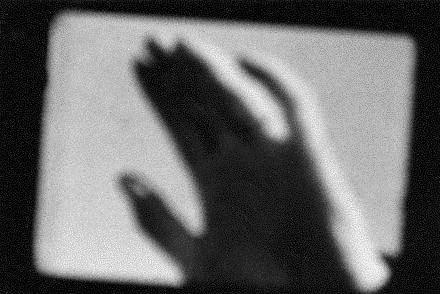
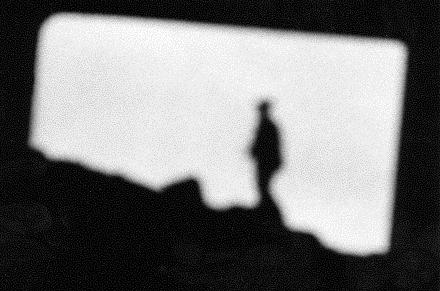
and Through The film is silent except for four short segments of sync sound, interviews with a man and a woman, which touch on two areas: control and anger; and the pressure of history on one’s identity-how do I identify myself as “I”, how as part of a “we”? The film is visual, perceptual; it was made in awe of the world that goes on with and without us and of our personal, human struggles. It is a film about life and death; a film of discrete units of the eternal and a film of living here and now. It was built up frame by frame-a film about power, played in insignificant terms, in the daily, barely noticed gestures, scenes, frames. (BS) "Through and Through reflects on the nature of perception and its relationship to film as a medium intrinsically in motion. The filmmaker has said she is concerned with how we situate ourselves in perception: her films aim to be 'true' to the human process of seeing. And they are. The very real achievement of Through and Through is its construction of a completely original equivalence of image. In Sternberg's films, sequences of images are given life and reality through specific strategies of motion, layering, montage and repetition. Images never crystallize into static, precious compositions, but rather change and overlap in response to an intensely physical sense of rhythm. Sternberg's work is typically 'Canadian'—diffident, hesitant, restrained. It reworks familiar themes of Canadian culture—landscape, visual perception (particularly in relation to the film apparatus), memory and identity with a diligent ethical intelligence that gathers authority as the film builds. The work emerges from a rigorous understanding of the potential and authenticity of film as a medium, but its ultimate significance seems to me to lie in its proposition of visual 'truth' as something indirect, provisional, and subject to revision—yet also urgent, necessary and valid.” ("Preception Through Process" by Tim Dallett ) “Through and Through is Sternberg's most expansive and richly textured film to date. In it she explores her concern with the social location of women in general and with her identity as a Jewish woman in particular. As with Tending Towards the Horizontal, Sternberg continues to deal with "the dilemma of being Jewish here and now—how am I implicated in a long history of being oppressed, expelled, murdered?" Through and Through is composed of two types of images, one of the pastoral—beautiful landscapes, richly coloured leaves, flowers, etc.—and the other of masculinity—male figures in the midst of a tug-of-war and a man walking against the wind. Using single frame filming, the work achieves a pulsing effect like the flickering light of a film projector and as such speaks simultaneously of an absence and presence, of place and of home. Through and Through marks a continuation of Sternberg's concern with the tensions between the universal and the particular, the generalized and the personal, the formal and informal and a remarkable exploration of how we dwell together within this complex system of differing realities and perceptions.” (Pleasure Dome) In the Collection of: The National Gallery of Canada Through and Through
credits Available from:
Canadian Filmmakers' Distribution Centre Lightcone |
|
| Through and Through Transcript | ||
| Reviews/Articles: | ||
| "Preception Through Process" by Tim Dallett (April 19, 1994) | ||
| "Panorama: Four Films by Barbara Sternberg" by Rae Davis, April 8, 1996 | ||
| Northern
Exposures 1995 (Catalogue) "Living the Everyday as History": article by Barbara Godard |
||
| like
a dream that vanishes: the films of Barbara Sternberg "re:surfacing" by Tim Dallett |
||
|
||
Through and Through from B.Sternberg on Vimeo. | ||